
Cycle Syncing
YOUR WORKOUTS
For decades, women have been taught to train as if their bodies operate on a straight line—show up, push hard, repeat, regardless of how they feel. Fatigue is treated as weakness. Rest is something to “earn.” And fluctuations in energy, strength, or motivation are brushed off as inconsistency rather than biology.
But the female body does not move in a straight line. It moves in a rhythm. Cycle syncing flips the script by asking a different question. What if the reason some workouts feel incredible and others feel impossible has nothing to do with discipline and everything to do with hormones?
Instead of forcing the same training intensity every day of the month, cycle syncing encourages women to align workouts with the natural hormonal phases of the menstrual cycle. The result is not less progress. It is often more, with fewer burnout days, less frustration, and a deeper sense of trust in the body.
As the cycle moves forward, estrogen begins to rise. With it comes renewed energy, sharper focus…
Why the One-Size-Fits-All Model Falls Short
Traditional fitness programming was largely built around male physiology, where hormone levels remain relatively stable day to day. Women, on the other hand, experience predictable hormonal shifts across roughly a 28 day cycle. Estrogen and progesterone rise and fall, influencing everything from muscle recovery and joint stability to endurance, metabolism, and even confidence.
Ignoring these shifts does not make them disappear. It simply makes training feel harder than it needs to be. Many women can point to days when they feel powerful, strong, and unstoppable, and other days when the exact same workout feels draining or defeating. Cycle syncing does not label those days as good or bad. It recognizes them as different and adjusts accordingly.
When women allow themselves to slow down during this phase, they often find they rebound stronger in the weeks that follow.
The Menstrual Phase: Permission to Slow Down
The menstrual phase, when bleeding begins, is often treated as something to push through. In reality, it is a time when both estrogen and progesterone are at their lowest, and the body is focused inward on recovery. Energy may dip. Endurance may feel limited. And that is not a failure. It is physiology.
This phase invites gentler movement such as walking, stretching, mobility work, or light yoga. Strength training, if done at all, should be minimal and intentional. Rest is not indulgent here. It is restorative. When women allow themselves to slow down during this phase, they often find they rebound stronger in the weeks that follow.
Many women feel more optimistic and mentally engaged during this phase, making it a powerful window for setting goals or experimenting with new routines.
The Follicular Phase: Momentum Builds
As the cycle moves forward, estrogen begins to rise. With it comes renewed energy, sharper focus, and an increased capacity to learn and adapt. This is often when motivation returns naturally. Workouts feel lighter. New movements click more easily.
It is an ideal time to reintroduce strength training, try new exercises, or increase intensity without forcing it. Many women feel more optimistic and mentally engaged during this phase, making it a powerful window for setting goals or experimenting with new routines.
Ovulation marks the hormonal high point of the cycle. Estrogen peaks, and for many women, so does confidence, power, and physical output.
Ovulation: Peak Performance Potential
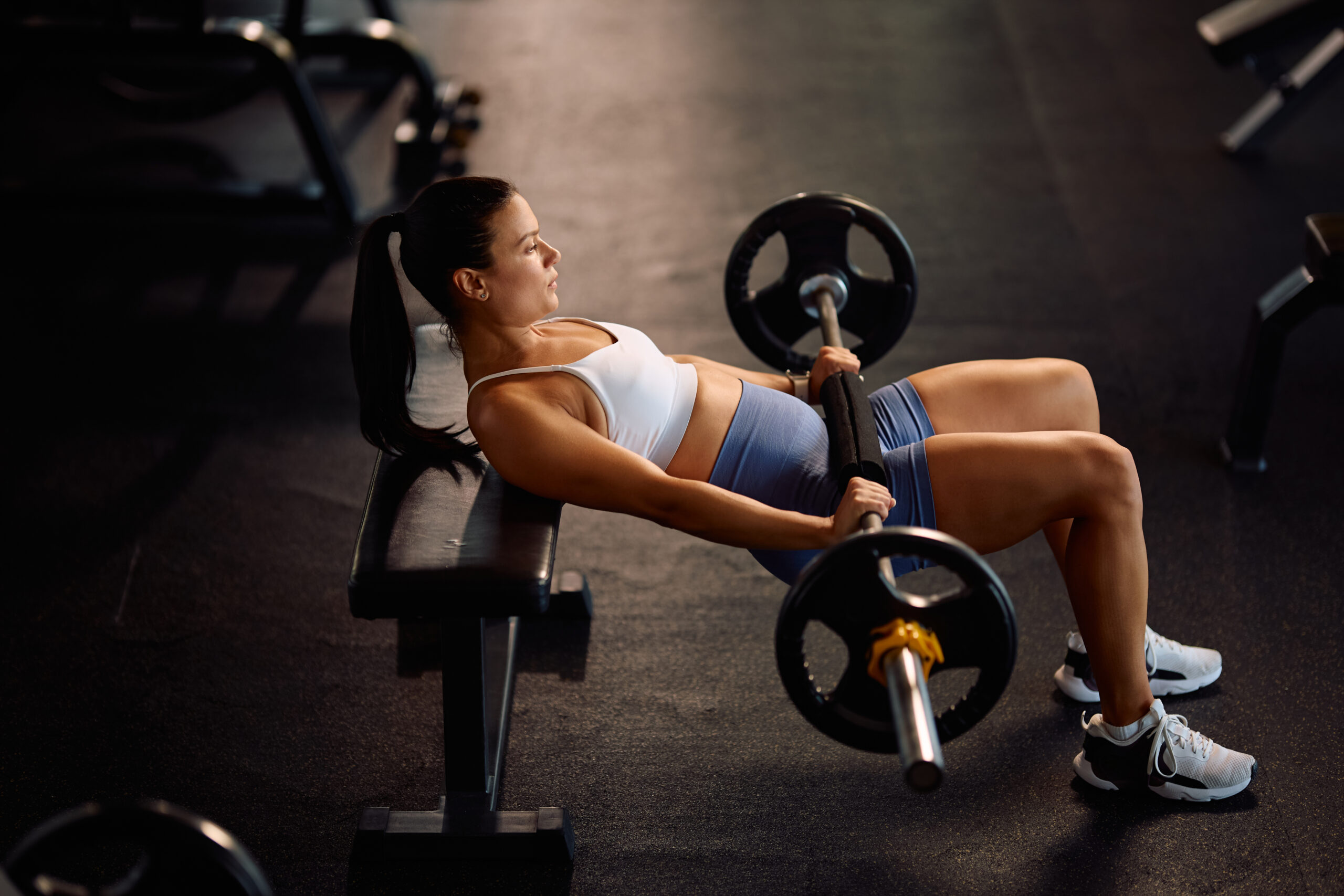
Ovulation marks the hormonal high point of the cycle. Estrogen peaks, and for many women, so does confidence, power, and physical output. This is when heavy lifts, high intensity training, sprint work, and performance driven workouts often feel their best. Strength gains tend to come more easily. Endurance improves. The body is primed for challenge.
It is also a time to be mindful. Increased estrogen can mean greater joint flexibility, which can raise injury risk if form and recovery are ignored. Listening closely to the body, even at its strongest, remains essential.
This phase isn’t about stopping, it’s about adapting.
The Luteal Phase: Shifting Gears, Not Giving Up
After ovulation, progesterone rises and estrogen gradually falls. Energy may become more variable. Recovery can take longer. Cravings and mood changes are common, yet frequently misunderstood. This phase is not about stopping. It is about adapting.
Workouts that emphasize consistency over intensity tend to work best here, such as moderate strength training, steady state cardio, Pilates, barre, or circuit style sessions that challenge without overwhelming. As the phase progresses, many women benefit from dialing back volume and allowing more recovery between sessions. Rather than fighting the body’s signals, honoring them can prevent the cycle of overtraining followed by guilt driven rest.
…prevent the cycle of overtraining followed by guilt-driven rest.
What Cycle Syncing Is—and What It Isn’t
Cycle syncing is not rigid. It is not about tracking every symptom or perfectly scheduling workouts around a calendar. And it is certainly not an excuse to disengage from training. At its core, cycle syncing is about awareness. It encourages women to notice patterns, respond with curiosity instead of criticism, and make strategic adjustments instead of forcing consistency at all costs.
Over time, many women report fewer injuries, more sustainable progress, and a healthier relationship with both exercise and rest. Fluctuations are not a problem to fix. They are information to use.
In a culture that glorifies constant intensity, listening can be the most radical training tool of all.
A More Sustainable Way Forward
Fitness does not have to feel like a battle against the body. When women train in alignment with their hormonal rhythms, workouts often become more intuitive, more effective, and more empowering.
Cycle syncing is not about doing less. It is about doing what works, when it works, and trusting that the body knows what it is doing. In a culture that glorifies constant intensity, listening can be the most radical training tool of all. INSPIRE
More From INSPIRE Summer 2025 Issue

INSPIRE Magazine: The Mental Weight Of Weight Loss
“The hardest part of weight loss isn’t what you see on the scale. It’s what you carry in your mind.”

INSPIRE Magazine: Cycle Syncing Your Workouts
“What if the reason some workouts feel incredible and others feel impossible has nothing to do with discipline and everything to do with hormones?”

INSPIRE Magazine: Is Chronic Inflammation Sabotaging Your Health?
Chronic inflammation isn’t a personal failure; it’s a call for change.

INSPIRE Magazine: Healthy Rituals To Reclaim Your Mornings
Reclaiming your mornings is not about becoming a perfect person. It is about taking back ownership. It is about deciding that you deserve to begin the day with clarity instead of chaos. It is not about adding more to your plate. It is about shifting your focus to what actually supports you.

INSPIRE Magazine: Bre Wilson – Back Surgery Couldn’t Break Her…Now She’s An IPL Pro
“It’s more than a title. It’s proof that setbacks don’t define you, perseverance does.”

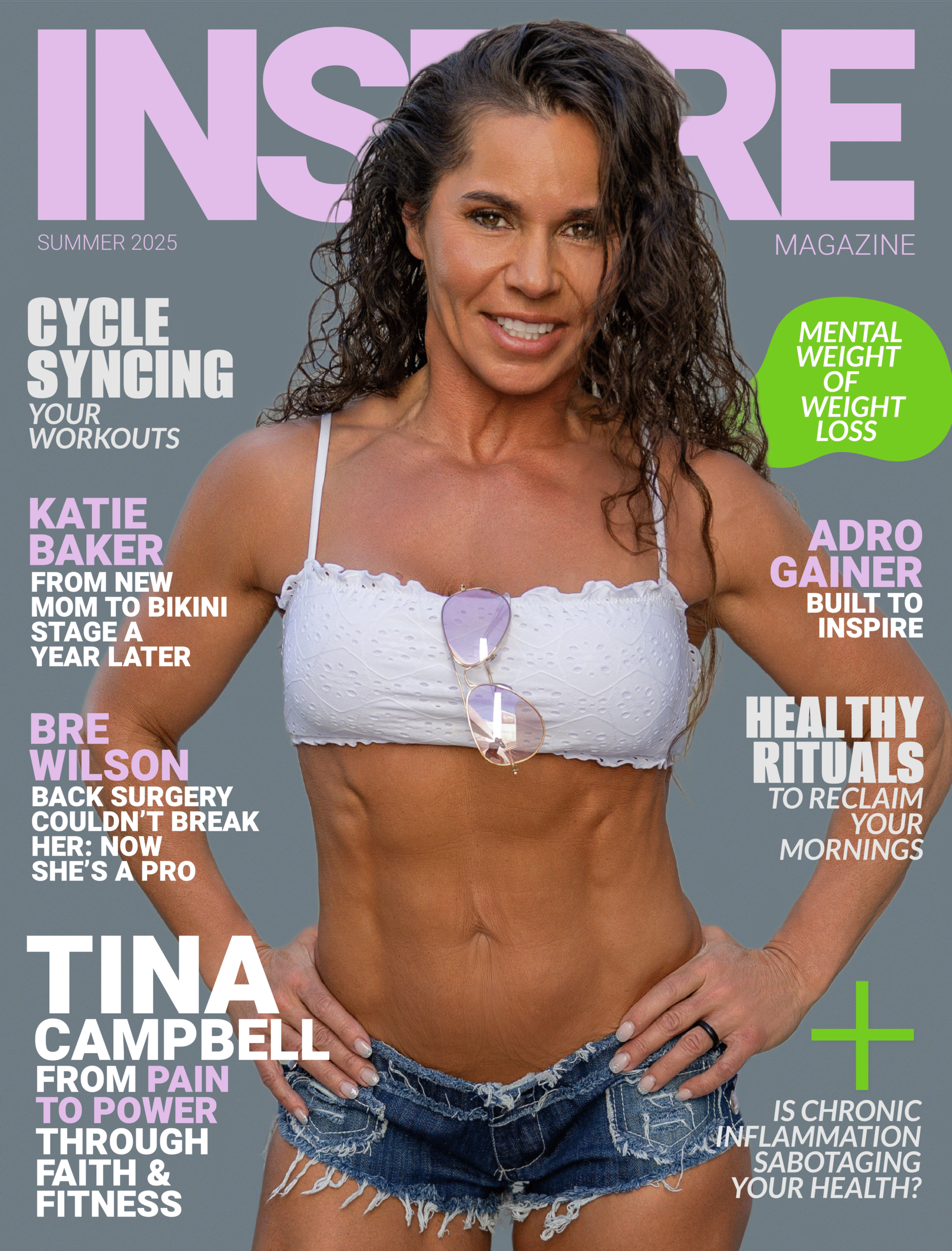
INSPIRE Magazine Cover Story: Tina Campbell – From Pain To Power, Through Faith & Fitness
“No matter what challenges life throws at you, resilience, faith, and determination can carry you through. You just need to believe.”

INSPIRE Magazine: Adro Gainer – From Challenge to Champion
“That moment on the couch could’ve ended everything. But instead, it lit the fire that built the athlete I am today.”

INSPIRE Magazine: Katie Baker – From New Mom to Bikini Stage A Year Later
“Pouring back into yourself postpartum is a must.”

New IPL Pro & Top Transformation Winner Tina Campbell Lands Cover Of INSPIRE Magazine
“When life knocked me to my knees, I learned that’s the perfect place to pray. After my son’s accident, I felt broken like there was nothing left of me. But through my faith, I found fire. Bodybuilding became my therapy. I stepped on that stage not for a trophy, but as proof that no matter how dark it gets, there’s always a light if you don’t stop fighting. Pain can become your power.”

INSPIRE Magazine – Ed Harden Collects More Wins!
“I was pretty shocked really! I hadn’t given much thought to any of it during the process because it had been such a long journey. I spoke about it with other friends who have competed, and they told me I didn’t have anything to worry about and I’d be fine and encouraged me to get on stage. I stopped putting so much stress on where I place at and decided to enjoy the process.”

INSPIRE Magazine – Time Management Techniques
Whether you are a busy professional, a student juggling multiple responsibilities, or a parent trying to balance work and family life, the ability to prioritize tasks, allocate time efficiently, and avoid procrastination is crucial.

INSPIRE Magazine – How To Make Training More Fun
Why most training programs fail, what you can do to make sure that yours doesn’t, and the steps needed to ensure your program sticks.