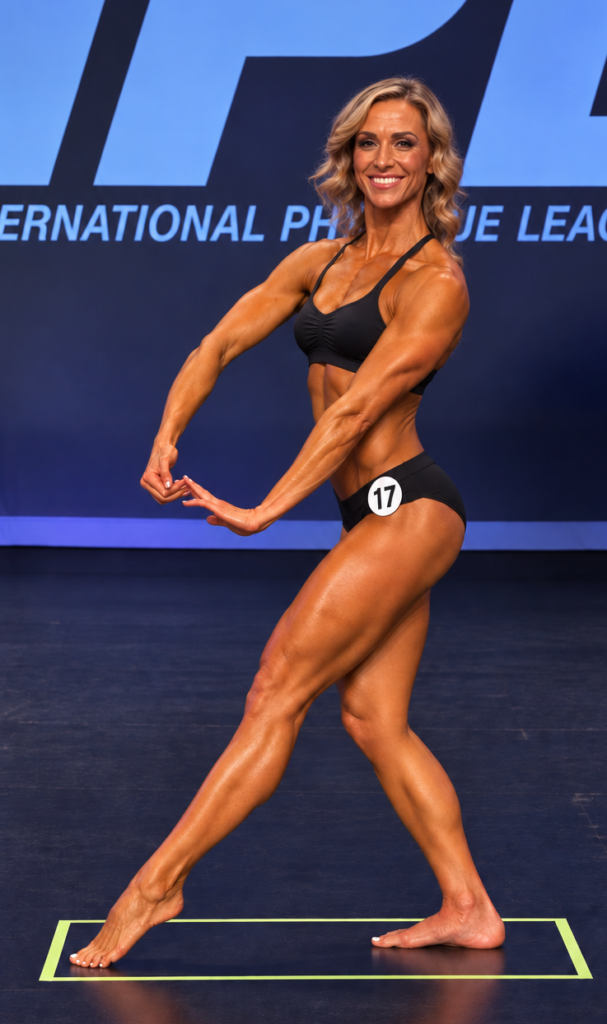
“Bootie” shorts and sports bra top. Top and bottom do not need to match.
Athletic wear may be plain or patterned. Bold prints and patterns are not recommended.
No stones on top or bottom.
Athletic wear should complement the physique and should not distract from it.
Presentation, including make-up and hair, is judged.
No shoes.
No jewelry, including earrings, bracelets, necklaces, or other accessories.
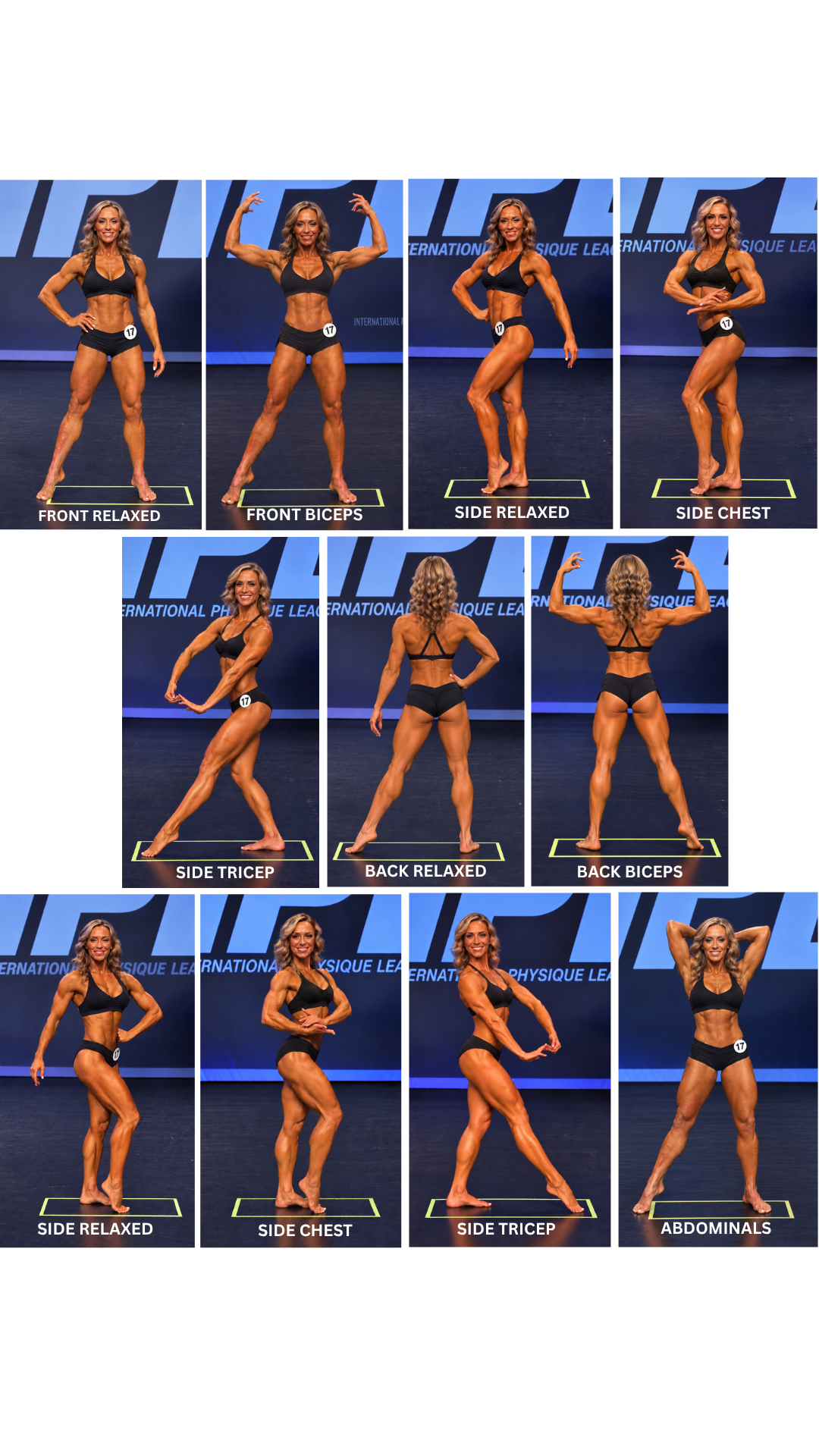
Women’s Athletic posing is structured and precise. Athletes should closely follow the poses demonstrated in the official IPL Women’s Athletic posing images.
Athletes will move through Front, First Side, Back, Second Side, and return to Front.
The mandatory poses are:
Front Relaxed
Front Biceps
Side Relaxed
Side Chest
Side Tricep
Back Relaxed
Back Biceps
Side Relaxed
Side Chest
Side Tricep
Abdominals
Poses should display an athletic, confident, and controlled presentation.
Hands and fingers should remain open and relaxed. Athletes should not clench their hands into fists at any time.
FRONT RELAXED
The athlete should face the judges directly, with the body and hips square to the front.
One hand should be positioned on the waist or hip, with the opposite arm hanging naturally at the side.
The leg on the same side as the hand positioned on the waist or hip should remain relatively straight and serve as the supporting leg. The opposite leg should extend outward to the side as demonstrated in the official posing image.
The athlete should maintain an upright, athletic posture while clearly presenting the physique to the judges.
FRONT BICEPS
From the Front Relaxed position, the athlete should raise both arms into the Front Biceps pose.
The upper arms should extend outward, with the elbows bent and positioned approximately at or slightly above shoulder level.
Hands and fingers should remain open. Hands should not be clenched into fists.
The supporting leg should remain relatively straight and positioned under the body. The opposite leg should extend outward to the side, maintaining the same general lower-body positioning demonstrated in Front Relaxed.
The torso should remain upright and facing the judges.
FIRST SIDE RELAXED
Quarter turn to the athlete’s right.
The athlete should present the side of the physique while keeping the upper body open enough for the judges to clearly evaluate the physique.
The hand closest to the back of the body should be positioned on the waist or hip. The opposite arm should hang naturally at the side.
The presentation leg, which is the leg closest to the judges, should be bent at the knee. The opposite leg should remain relatively straight and serve as the supporting leg.
The athlete should keep the head turned toward the judges.
FIRST SIDE CHEST
From the Side Relaxed position, the athlete should transition into the Side Chest pose.
The hands should meet in front of the torso, palm against palm, with the hands and fingers open. The hands should not be clenched into fists.
The chest should be lifted and presented toward the judges while maintaining the side orientation of the lower body.
The presentation leg closest to the judges should remain bent at the knee, with the opposite leg remaining relatively straight and serving as the supporting leg.
The athlete should continue looking toward the judges.
FIRST SIDE TRICEP
From the Side Chest position, the athlete should transition into the Side Tricep pose.
The presentation leg closest to the judges should extend outward, as demonstrated in the official posing image. The opposite leg should remain under the body and serve as the supporting leg.
The arms should extend downward and slightly forward in front of the body.
One hand should grasp the fingers of the opposite hand to establish the pose and display the triceps.
The torso should remain upright rather than leaning excessively forward or backward.
The athlete should continue looking toward the judges.
BACK RELAXED
Quarter turn to the athlete’s right.
The athlete should face directly away from the judges.
The Back Relaxed position should generally mirror the Front Relaxed position.
One hand should be positioned on the waist or hip, with the opposite arm hanging naturally at the side.
The leg on the same side as the hand positioned on the waist or hip should remain relatively straight and serve as the supporting leg. The opposite leg should extend outward to the side as demonstrated in the official posing image.
The athlete should maintain an upright posture that clearly displays the back, shoulders, waist, glutes, and legs.
Athletes with long hair should position their hair so the back and shoulders remain clearly visible to the judges.
BACK BICEPS
From the Back Relaxed position, the athlete should raise both arms into the Back Biceps pose.
The upper arms should extend outward, with the elbows bent and positioned approximately at or slightly above shoulder level.
Hands and fingers should remain open. Hands should not be clenched into fists.
The supporting leg should remain relatively straight and positioned under the body. The opposite leg should extend outward to the side, maintaining the lower-body positioning demonstrated in the official Back Biceps image.
The athlete should maintain an upright position while displaying the back, shoulders, arms, waist, and lower-body development.
Athletes with long hair should position their hair so the back and shoulders remain clearly visible.
SECOND SIDE RELAXED
Quarter turn to the athlete’s right.
The Second Side Relaxed position should mirror the First Side Relaxed position, presenting the opposite side of the physique to the judges.
The hand closest to the back of the body should be positioned on the waist or hip, with the opposite arm hanging naturally at the side.
The presentation leg, which is now the leg closest to the judges, should be bent at the knee. The opposite leg should remain relatively straight and serve as the supporting leg.
The athlete should keep the head turned toward the judges.
SECOND SIDE CHEST
From the Side Relaxed position, the athlete should transition into the Side Chest pose.
The Second Side Chest should mirror the First Side Chest pose from the opposite side.
The hands should meet in front of the torso, palm against palm, with the hands and fingers open. The hands should not be clenched into fists.
The chest should be lifted and presented toward the judges while maintaining the side orientation of the lower body.
The presentation leg closest to the judges should remain bent at the knee, with the opposite leg remaining relatively straight and serving as the supporting leg.
The athlete should continue looking toward the judges.
SECOND SIDE TRICEP
From the Side Chest position, the athlete should transition into the Side Tricep pose.
The Second Side Tricep should mirror the First Side Tricep pose from the opposite side.
The presentation leg closest to the judges should extend outward, as demonstrated in the official posing image. The opposite leg should remain under the body and serve as the supporting leg.
The arms should extend downward and slightly forward, with one hand grasping the fingers of the opposite hand.
The torso should remain upright and controlled.
The athlete should continue looking toward the judges.
ABDOMINALS
Quarter turn to the athlete’s right, returning to the front.
Both hands should be positioned behind the head, with the elbows open outward.
One leg should remain relatively straight and positioned under the body as the supporting leg. The opposite leg should extend outward to the side as demonstrated in the official posing image.
The abdominal muscles should be engaged and clearly displayed while maintaining an upright, athletic presentation.
Athletes should not crunch or hunch forward as they might in a traditional bodybuilding abdominal pose. The Women’s Athletic Abdominals pose is intended to maintain a sporty, balanced appearance while showcasing the midsection.
OVERALL PRESENTATION
Women’s Athletic posing should demonstrate strength, athleticism, control, and confidence.
The official IPL Women’s Athletic posing images are the standard for the mandatory poses. Athletes should practice and execute each pose as demonstrated rather than substantially modifying the positioning or substituting alternative bodybuilding poses.
Transitions between poses should be controlled and deliberate, with the athlete maintaining presentation throughout each quarter turn.