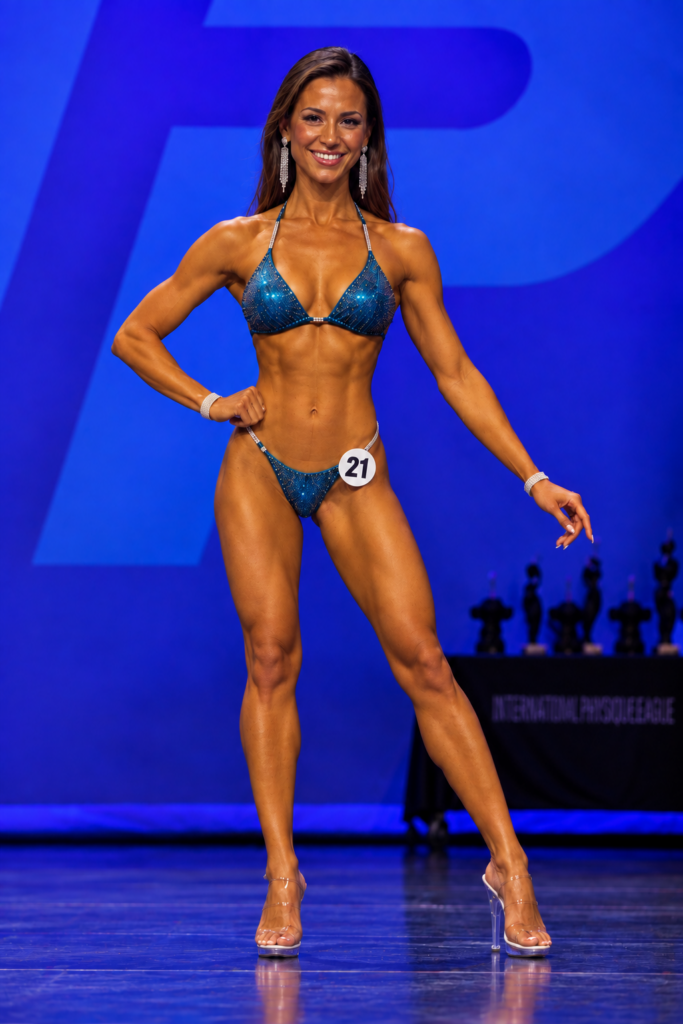
2-piece suit may be patterned and have stones.
Athletes may wear any suit cut/style on glutes.
Jewelry and hair ornaments, are allowed at pre-judging and Finals.
No costumes or props at anytime.
Presentation, including make-up and hair, is judged.
Clear Competition Heels. With or without stones. (no minimum or maximum heel height)
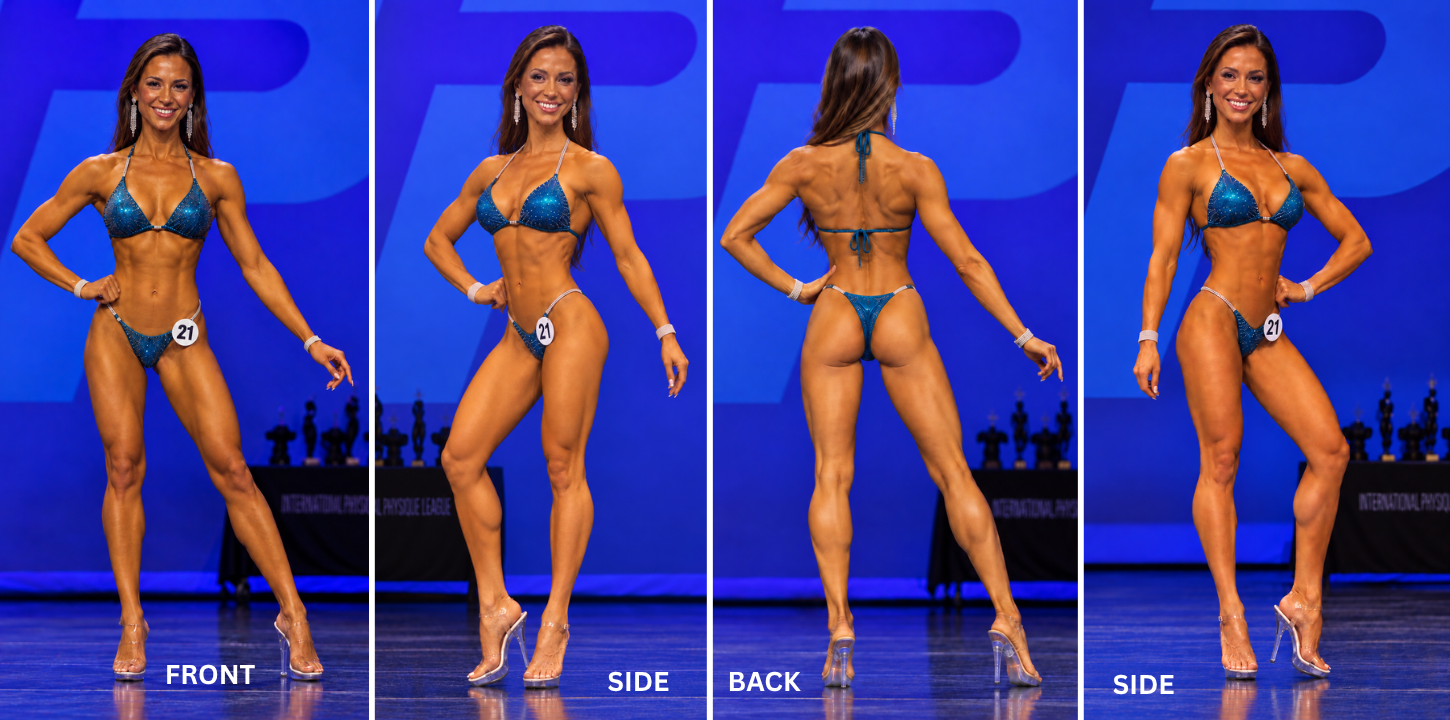
FRONT POSE
The athlete should face the judges directly, with the front of the body square to the judges.
Both feet should be positioned on the same line, with the toes pointing forward.
The hips should remain square to the front. Do not twist or rotate the hips.
One leg should remain straight and support the body. The opposite leg should be extended outward to the side with the foot placed naturally on the floor.
One hand should rest on the waist/hip on the same side as the straight support leg. The opposite arm should hang naturally and freely at the athlete’s side.
Athletes may choose which side they prefer for the hand-on-waist position. However, once a side is selected for prejudging, the athlete should maintain that same side throughout prejudging and should not switch sides between comparisons.
WRIST POSITION
The wrist should remain approximately in a straight line with the forearm.
Do not bend the wrist noticeably upward or downward. The hand and wrist should look natural, relaxed, and controlled.
FIRST SIDE POSE
Quarter turn to the athlete’s right.
The athlete should rotate the lower body and waist substantially toward the side, approximately 45 degrees or more, while continuing to present the upper body and face toward the judges.
The hip on the presentation side should be clearly visible.
The hand on the back side of the body should remain on the waist/hip. The arm on the side facing the judges should hang naturally and freely.
The athlete should continue looking toward the judges.
The legs should be positioned naturally, with the forward leg bent and the other leg serving as the primary support leg.
BACK POSE
Quarter turn to the athlete’s right.
The back pose is essentially the mirror image of the front pose, with the athlete facing away from the judges.
The feet should remain positioned naturally and the athlete should maintain the same overall presentation and posture as the front pose.
Athletes with long hair should move their hair to the side so that the judges can clearly see the athlete’s back, including the back, shoulders, and waist.
SECOND SIDE POSE
Quarter turn to the athlete’s right.
The athlete should assume the same basic side-pose structure as the first side pose, but on the opposite side.
The waist and hips should be substantially turned toward the side while the upper body and face remain presented toward the judges.
The hand on the back side should rest on the waist/hip, while the arm facing the judges remains free and relaxed.
The forward leg should be bent naturally, with the other leg serving as the primary support leg.
The wrist should remain approximately straight with the forearm and should not be noticeably bent upward or downward.