
SWIMSUIT MODEL POSING & GUIDELINES
Guidelines
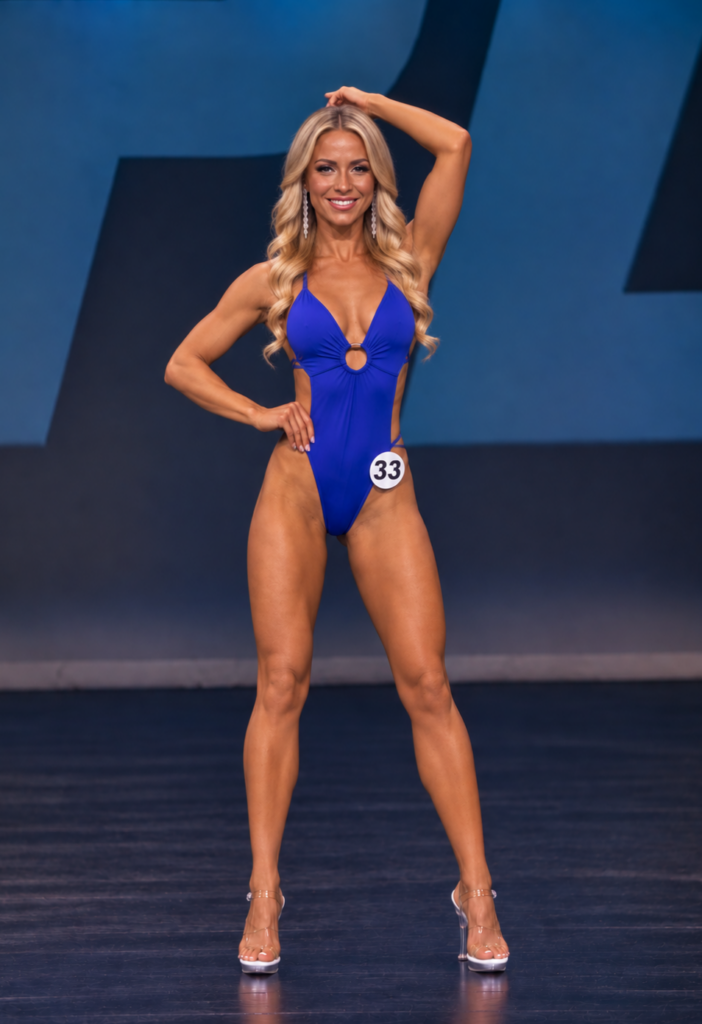
One-piece suit may be plain or patterned. Bold print and patterns not recommended. No stones.
Front of suit must cover the navel. Navel must not be visible.
Athletes may wear any suit cut/style on glutes.
Earrings are allowed. No other Jewelry.
Hair ornaments allowed at pre-judging and Finals.
Presentation, including make-up and hair, is judged.
Clear Competition Heels. With or without stones. (no minimum or maximum heel height)
Posing
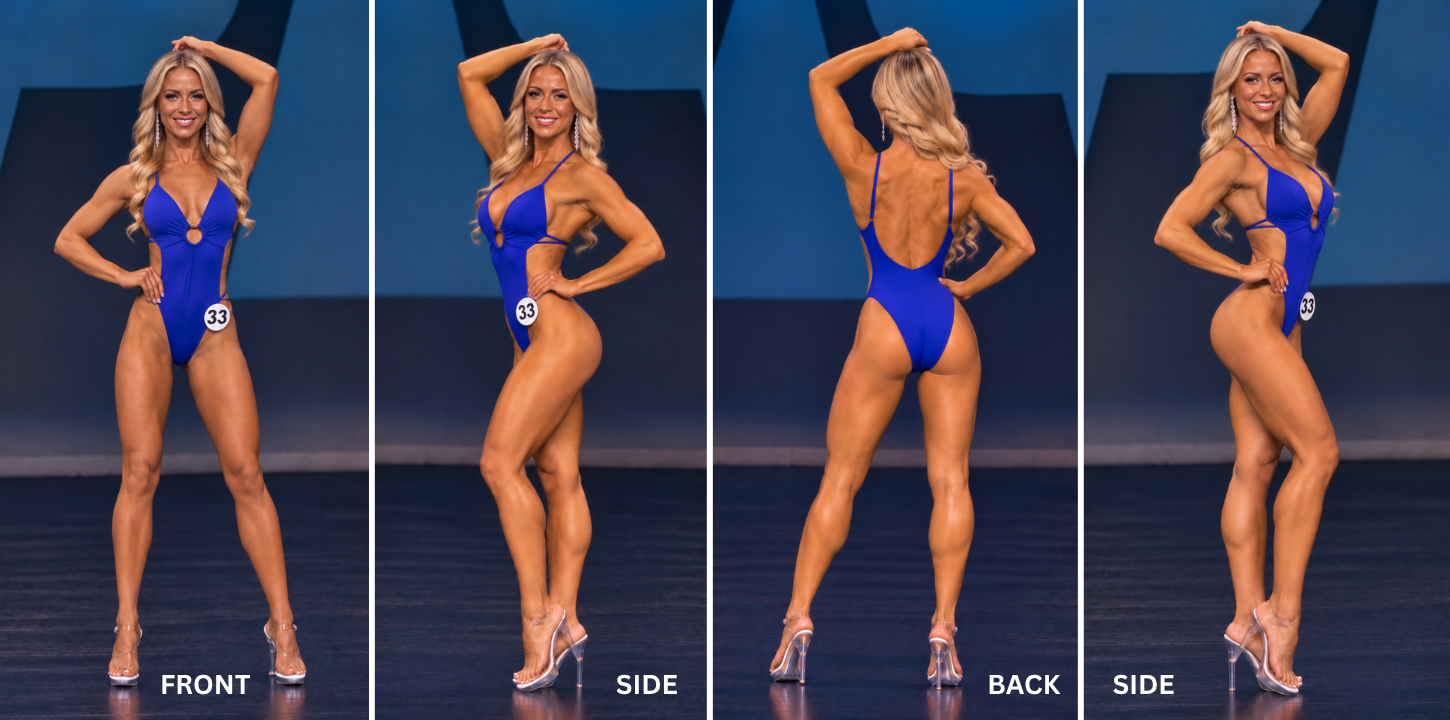
GENERAL ARM POSITION
One arm should remain raised overhead, with the opposite hand positioned on the waist or hip.
The raised arm should be bent naturally at the elbow, with the elbow open and the hand positioned above or resting naturally near the top of the head.
The arms and hands may drop or be readjusted during transitions between poses.
FRONT POSE
The athlete should face the judges directly, with the front of the body and hips square to the judges.
One arm should be raised overhead, with the opposite hand positioned on the waist or hip.
Both legs should be relatively straight, with the feet positioned apart to create a balanced stance.
The toes should point generally forward.
Do not twist or substantially rotate the hips.
FIRST SIDE POSE
Quarter turn to the athlete’s right.
The back arm should remain raised overhead, with the opposite hand positioned on the waist or hip. The arms may drop or be readjusted during the transition from front to side.
The athlete should rotate the lower body and waist substantially toward the side while continuing to present the upper body and face toward the judges.
The hip on the presentation side should be clearly visible.
The forward leg should be bent naturally, with the other leg serving as the primary support leg.
The athlete should continue looking toward the judges.
BACK POSE
Quarter turn to the athlete’s right.
One arm should remain raised overhead, with the opposite hand positioned on the waist or hip. The arms may drop or be readjusted during the transition from side to back.
The athlete should face away from the judges, with the back clearly presented for evaluation.
One leg should serve as the primary support leg while the opposite leg extends outward to the side.
Athletes with long hair should move their hair to one side or otherwise position it so the back, shoulders, and waist remain clearly visible to the judges.
SECOND SIDE POSE
Quarter turn to the athlete’s right.
One arm should remain raised overhead, with the opposite hand positioned on the waist or hip. The arms may drop or be readjusted during the transition from back to side.
The athlete should rotate the lower body and waist substantially toward the side while continuing to present the upper body and face toward the judges.
The hip on the presentation side should be clearly visible.
The forward leg should be bent naturally, with the other leg serving as the primary support leg.
The athlete should continue looking toward the judges.